
Translate business requirements, operational workflows, and product assumptions into clear user journeys before engineering effort is committed to screens that may not support the real workflow. This is especially useful for portals, dashboards, CRMs, field tools, and business systems where the product must match how teams already think about work.
Service
Product Design & UI/UX.
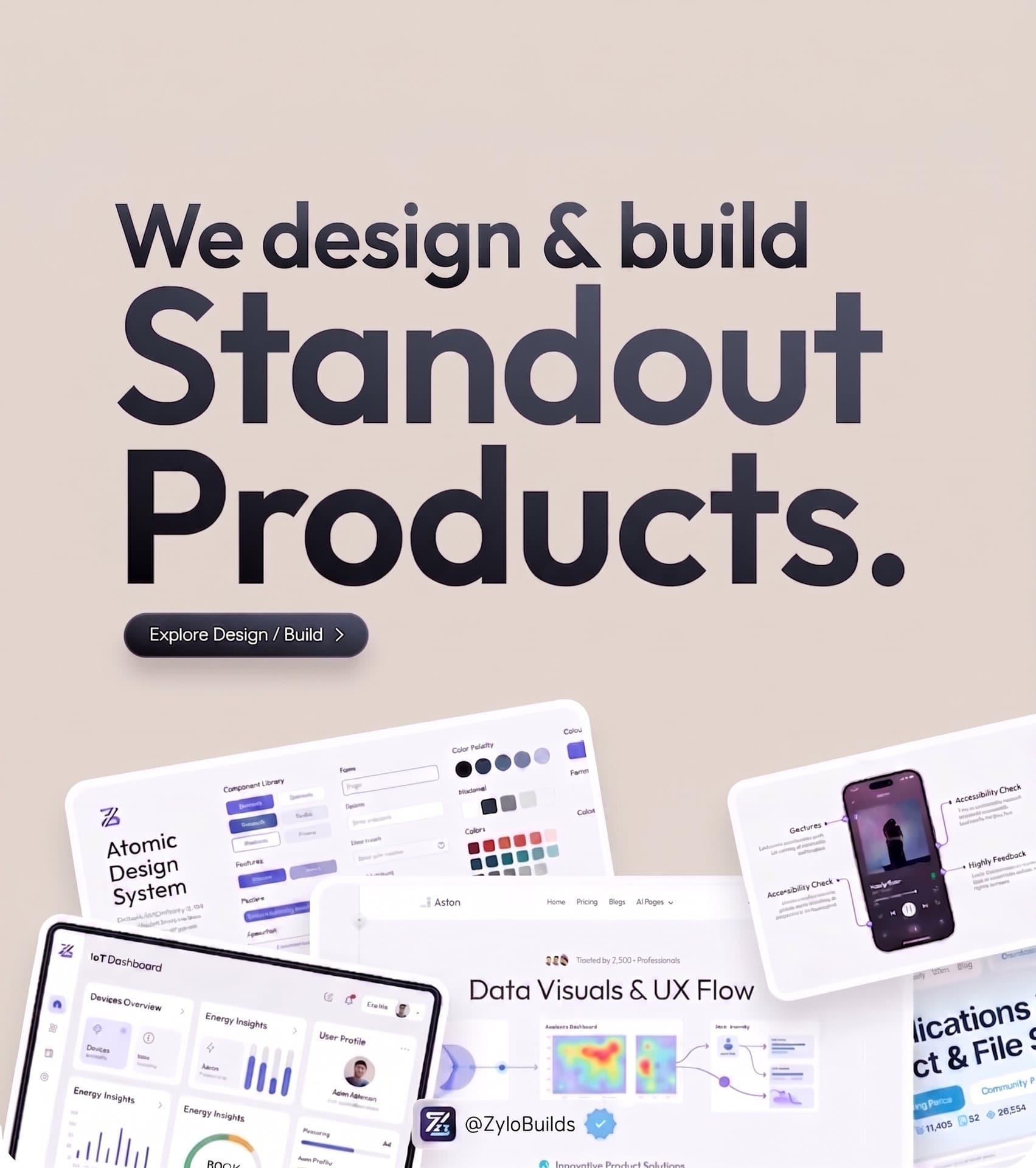
Product discovery, user flows, interface design, prototypes, and UI systems that make complex software easier to understand, build, and use.
Product discoveryUser flowsInteraction designResponsive interfacesInteractive prototypesDesign systems
What changes
Practical outcomes, not abstract capability claims.
Each engagement is shaped around the workflows, records, permissions, and launch risks that matter most for the specific system.
Map information architecture for dashboards, portals, CRMs, field tools, marketplaces, and internal systems so users can find records, actions, and status information without unnecessary friction. The design work clarifies what belongs on each screen, which actions are primary, and how users move between related records.
Design responsive interfaces for web and mobile experiences, with attention to navigation, forms, tables, empty states, permissions, and repeated operational use. The goal is not decorative graphic design; it is product interface design that can survive real workflows, edge cases, and different screen sizes.
Create interactive prototypes that help stakeholders evaluate important workflows, clarify edge cases, and reduce ambiguity before full application development begins. Prototypes give business and engineering teams something concrete to review while changes are still cheaper than rebuilding production features.
Build UI systems and reusable interface patterns that support consistent product delivery across feature modules, user roles, and future roadmap phases. Shared patterns for buttons, forms, cards, tables, navigation, and states help the product feel coherent as more screens are added.
Prepare design handoff in close collaboration with engineering so layouts, states, interactions, and responsive behavior can be implemented without losing the product intent. This keeps the design process connected to build feasibility, data needs, component structure, and release planning.
Clarify role-specific experiences for operators, administrators, customers, field users, and leadership teams when a product serves more than one audience. This helps keep permissions, navigation, dashboards, and calls to action aligned with each user's actual responsibilities.
Improve usability by designing for common product states such as loading, validation, error recovery, empty records, dense data views, and mobile constraints. These states matter in real operational software because users need the interface to stay understandable when the workflow is imperfect.
Keep Product Design & UI/UX focused on product clarity and usability, distinct from web application development or mobile app development, which own the implementation of the production software. Design defines the experience and reduces ambiguity; engineering turns that experience into a reliable shipped system.
Typical delivery path: Product discovery, Workflow mapping, Information architecture, Wireframes, Interactive prototype, Design handoff.
Ready to map this into your business?
Bring us the workflow, customer problem, or product idea. We will help shape the right next step.